Sponsored by

Product of the Day 🏆
We’ve tested over 600 AI products over the last 2 years.
A few are actually worth showing up here, so we partnered with SlideHub.
Most slide chaos starts innocently.

A few decks. A few folders. A few “final_v2_final” files.
Then suddenly brand teams lose control and consultants lose time.
SlideHub brings shared slides into one place, so presentation content stays usable, current, and much easier to manage.
In short, flawless product for building presentations.
Now, back to the chaos Google just unleashed at I/O.
Google I/O 2026
Last week was Google I/O 2026. Google's annual recap post lists exactly 100 announcements. I read all of them so you don't have to.
All of them are cool and could easily deserve their own headlines, but a few will actually change how you build. Let’s go over those.
*Official article link at the end of the issue
The 5 announcements actually worth your attention
1. Gemini 3.5 Flash. (Opus you better watch out…)
The headline model. Google says it beats Gemini 3.1 Pro on coding and agentic benchmarks at Flash-tier speed and roughly half the cost of other frontier models. If you're already on Gemini, this is a free upgrade. If you're not, it's the most credible cheap-and-fast option on the market right now (we'll come back to that).
2. Managed Agents in the Gemini API
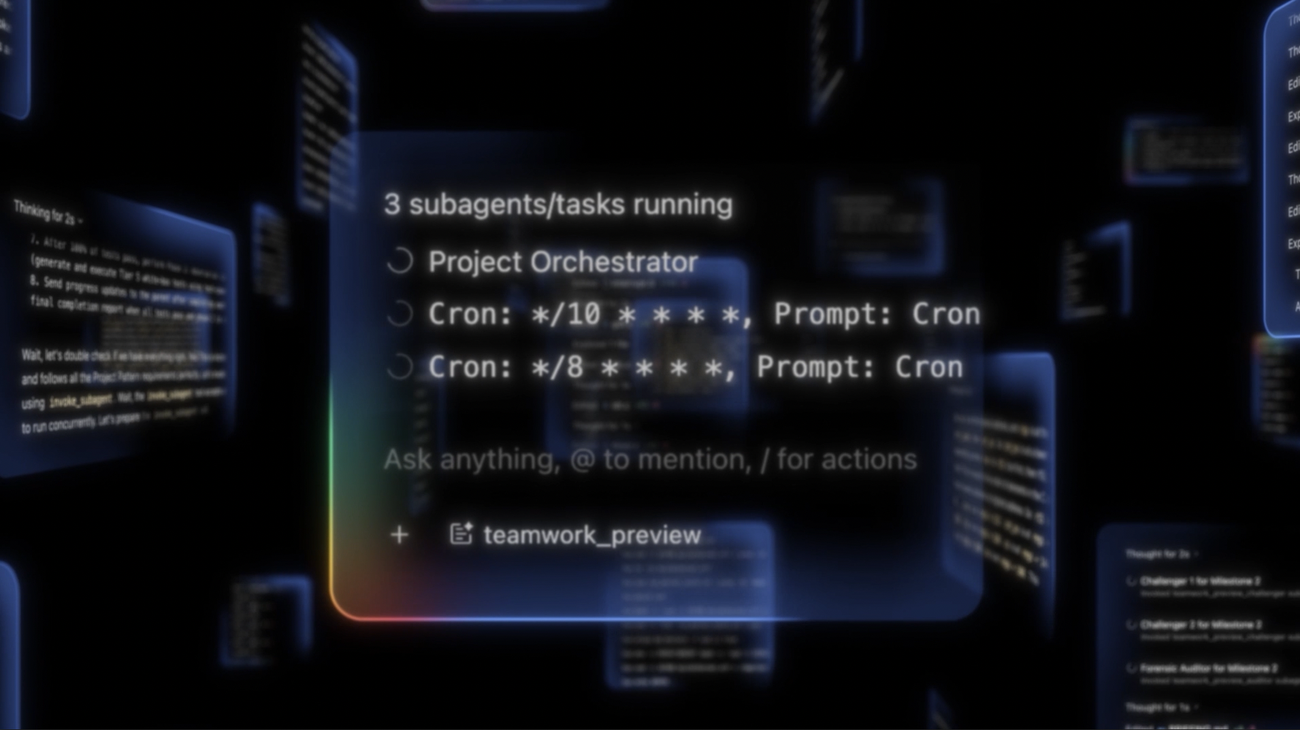
A single API call spins up a remote Linux sandbox where an agent can plan, run code, manage files, and browse the web. You define instructions and skills in markdown files (AGENTS.md, SKILL.md) and register them. This is the most builder-relevant launch of the week. More on this below.
3. AI Studio now ships native Android apps (!!)
You prompt, it builds, you deploy straight to the Google Play Internal Test Track with one click. Free for your first two deploys, no card required. For anyone shipping a mobile MVP, this collapses a week of setup into an afternoon.

4. Gemini Omni (the most fun of all)
Google's new model that generates video from any input you throw at it. Reference an image, text, audio, or another video and it produces a coherent clip with a real grasp of physics (gravity, kinetic energy, fluid dynamics) and much better character consistency across scenes.
Every output ships with a SynthID watermark (tool to identify AI-generated content), so verification is built in. Already live in the Gemini app, Flow, and YouTube Shorts Remix for free. If you make any kind of short-form content, this is the most fun thing to play with this week.

5. The new AI Search (bye bye ranking on Google)
AI Mode is now the default Search experience globally, powered by 3.5 Flash, with AI Overviews and AI Mode merged into one flow. The new Search box also takes text, images, files, videos, and Chrome tabs together and reasons across them. If you do any kind of research as part of your work, this quietly became the most capable general-purpose search tool on the internet this week.

And the ones you should skip (for now)
Gemini Spark: The "24/7 personal agent" demo was the showcase moment of the keynote. It's in trusted testers only, beta to Ultra subscribers in the US next week. Real product is months away. Don't restructure your workflow around it yet.
Universal Cart: Genuinely cool consumer shopping product. Zero builder relevance unless you sell physical goods on Google.
Most of the Workspace stuff. Docs Live, Talk to Keep, Gmail Live. All "coming this summer." Wait until they ship.
Meanwhile, Deepseek shook the industry

The whale strikes back
On Saturday, Deepseek made its 75% price cut on V4 Pro permanent. The promotional rate that was supposed to expire May 31 is now the new floor.
V4-Pro output tokens are now $0.87 per million. That's roughly a quarter of what they were at launch a month ago. In contrast, Opus 4.7 is priced at $25 per million tokens. Still smarter, but is it worth 28 times more?
Here's where it sits against everyone else:

Source: Artificial Analysis

Source: Artificial Analysis
Two things to take from this:
The first is obvious. If you're price-sensitive and shipping high-volume work (long-context document review, batch processing, anything where input tokens dominate), V4-Pro is now the number to beat. An app generating 100M output tokens a month runs about $87 on V4-Pro versus around $2,500 on Claude Opus 4.7.
Now tokenmaxxing is actually viable. Sorry Uber (min 28:45)
The second is less obvious but more useful. Notice where Gemini 3.5 Flash lands on that chart. Google's cost-optimized model is priced roughly in the same neighborhood as DeepSeek's flagship. The floor isn't just dropping for one provider. It's dropping everywhere.
Which means: if you built your pricing model six months ago on top of $10-per-million-token assumptions, your margins just got a lot more interesting. Worth a quick pass on your stack.
In summary:
A LOT of new developments and tools to play with. Thanks Google.
A top tier model that will actually cut your costs by more than half. Thanks Deepseek.
As promised, here’s Google’s official article.

A lot of new toys to play with
What did you think of this email?
Just reply to let me know any specifics. This newsletter is built on what you actually need.
See you next week. Or maybe later this week?
Stefano (@stefano_martell on X)
Co-Founder, The AI Leverage by Bestapps.ai
P.S. Refer friends and unlock rewards. Get featured on The AI Leverage for free when you reach 10 referrals: